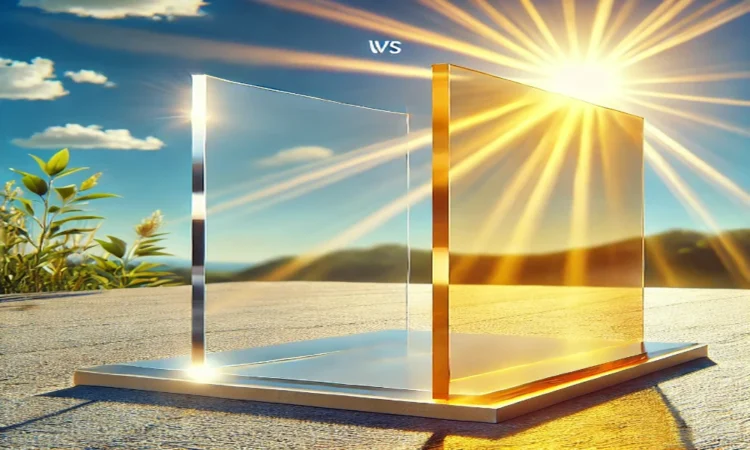
The use of acrylic sheets is popular in residential, office, retail, and commercial interior settings due to their clarity, lightweight nature, and flexibility of usage. Acrylic sheets can be used for various interior items such as kitchen backsplashes, wall panels, and partitions. Nonetheless, just like other types of plastics, acrylic sheets have the ability to contract and expand depending on variations in temperature. One must know the temperature effect on acrylic to keep them in good condition during installation.
Acrylic Sheet Heat Resistance: Understanding Its Performance
Knowing acrylic sheet heat resistance becomes crucial when choosing acrylic for either indoor or outdoor uses. Good quality acrylic sheets are engineered to resist different weather conditions without losing transparency or strength. Explore the solid acrylic gloss collection to find heat-stable, UV-resistant options suited for both indoor and outdoor applications. Besides, they have good resistance to moisture and ultraviolet light.
Nevertheless, it is important to know that acrylic is sensitive to changes in temperature. Acrylic expands in the heat, whereas cold causes it to contract. Such a reaction is absolutely normal and shouldn’t be considered as a defect. It is enough to provide room for expansion while installing your acrylic panel to avoid any problems.
Acrylic in Hot Weather: Common Effects and Preventive MeasuresIn essence, the performance of acrylic in hot weather is dependent mainly on how it has been installed as opposed to the temperatures themselves. Acrylic tends to swell when temperatures are high in summers. As the temperatures drop, the sheets tend to shrink back to their normal sizes.
The main issues occur when the sheets are installed too tight, fasteners are tightened beyond normal, or when there is inadequate space for expansion. This could lead to warping, stress on screw holes, and even cracking around the edges where the sheets are fixed. To ensure the acrylic sheets perform better in warm conditions, one should ensure there are adequate expansion allowances, use appropriate fixing techniques, provide sufficient ventilation for big panels, and prevent acrylic sheets from coming into direct contact with very warm surfaces.
Temperature Effect on Acrylic: Installation Tips for Long-Term Performance
The temperature effect on acrylic is natural and can be easily managed with correct installation practices. Choosing the correct sheet thickness according to the application, use of professional fixing methods, and non-rigid installation are few ways one could enhance the performance of the sheets.
Acrylic sheet applications like kitchen backdrops, partitions, skylights, and decorative walls all require prior planning. Refer to the acrylic sheets for walls installation guide for step-by-step tips on surface preparation and correct fixing methods. Regular checks of the outdoor installations helps prevent any problems due to temperature fluctuations. Understanding the temperature effect on acrylic enables homeowners, architects, and fabricators to use acrylic confidently in both residential and commercial projects while maintaining its appearance and structural integrity.
Conclusion
Acrylic sheet heat resistance in places where there are continuous temperature fluctuations is natural and must be considered during installation. Using the right kind of material, making proper expansion allowance and following the right installation techniques, acrylic sheets continue to offer great durability, clarity and elegance in every environment. No matter if it is being used as decor panels, for kitchen use, partitions or even in any commercial project, the high-quality acrylic products by Royale Touche ensure good performance without compromising on aesthetics.