Choosing tile material or a trendy style for your pool during build and renovations without any consideration for what your pool needs or your landscape design as a whole is a trap that turns your pool into a hazard zone that quickly breaks down the structure and appearance.
However, by curating tiling material choices and technical processes, you can achieve a perfect solution for your pool type and environment. The key is selecting the most appropriate tiling options to achieve the right mix of pool safety, reliability over time and contemporary beauty. The most beautiful finish is only as good as the system upon which it sits.
Concrete and Gunite Pools The greatest freedom for tile design
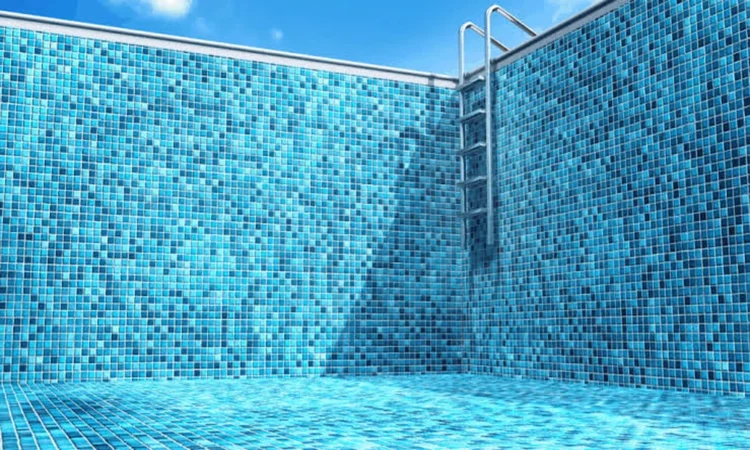
A concrete or gunite pool allows you total freedom in creating a truly unique, custom-shaped, fully tiled pool interior; both floor and wall interior. That means you get the greatest freedom of exercising your tiling options compared to other pool types.
However, for concrete or gunite Pool Tiles, 2×2 mosaic zellige tiles and glazed zellige square or thin bejmat tiles represent the ultimate tile solution. Their impervious glazed surfaces, flexible small-format mosaic backing over custom curves, and dense grout grid make them perfectly suited for the structural longevity and design freedom of concrete pools.
First of all a pool shell doesn’t just need filling; it requires certain finishing works to be applied prior to the tiling process. This comprises, but not necessarily in this order:
- Allowing newly constructed concrete to cure adequately.
- Applying a compatible waterproofing and crack-isolation system.
- Selecting flexible, pool-rated tile adhesives.
- Applying a grout and movement joints capable of withstanding continuous water contact.
If you are a homeowner planning a luxury pool, this construction technique will allow you to be flexible in your pool designs while not overlooking waterproofing.
Fiberglass Pool: How to Select a Waterline Tiling System
Fiberglass pools come as prefab shells, which is a far simpler install than constructing a fully concrete wall. But fiberglass’ smooth surfaces are more forgiving than rigid masonry. Fiberglass will flex and move with temperature changes, which is incompatible with standard full-surface tile work.
Homeowners typically think in terms of decorative tiling around the waterline and in the surround areas, rather than trying to wrap the entire shell. This offers the chance to include color and detail without breaking through the shell’s original build-up system.
For instance, various Zellige colors, like Sea Green or Forest Green, might lend themselves to a decorative waterline feature, as long as the specific product and bonding system is suitable for that use. The installer will need to consider the movement of the fiberglass shell in relation to the concrete or coping.
The point of course is compatibility. A formulator needs to determine the appropriate bonding system rather than assuming a generic cement-based glue will attach reliably to fibreglass.
Vinyl Liner Pools and the Drawbacks of Decorative Tiling
The definition of a vinyl liner pool is the first thing to understand. Because a flexible liner is how the water-holding interior of the pool is constructed, there is no tiled shell to create with typical ceramic, marble, or glass tile.
But that doesn’t mean decorating around your pool is off the table. Aesthetic finishes can be used for the coping and deck around the pool, and tailor-made liners can have customized printed tile-effect designs along the waterline.
For instance, a brick of a homeowner may want to architect in a printed liner border that complements the natural stone deck, or a beautiful marble border can be positioned around the pool, as an example. Casablanca Carrara Marble is one design cue that could be emulated around the pool, if the finish is appropriate for outdoor use.
Just remember to respect the liner system. Don’t apply a liner directly to what seems to be the solid concrete surface or install regular ceramic tiles directly on top of the flexible liner surface. A trained pool builder can successfully make all the transitions without harming the liner.
Skimmer and Overflow Pools: Ensuring the Tile Design Complements the Circulatory System
Water movement within the pool impacts the placement of the tiles too. In a conventional skimmer pool, the water does not come to the top of the coping, but rather sits below it, often by 15-20cm or so. Here is the open area of the pool wall where a line of waterline tile adds definition and easier cleaning.
There’s a catch. Overflow and infinity pools require a number of specific adjustments, including visible, over-the-deck ‘overflow’ edges that allow the water to run down into collection channels, which are generally flush with the surrounding deck for a seamless appearance. Use a slip-resistant surface.
- Waterline tile placement and ease of cleaning.
- Compatible coping materials and movement joints.
- Slip resistance around overflow channels.
- Accurate levels and drainage gradients.
Working together from the beginning, the pool builder and the tile installer can coordinate the final details so they enhance the circulation pattern rather than disrupt it.
In essence, getting the right tiling solution starts with concept first, not falling in love with one trendy example. Working with an experienced pool tile store and tile builder is the second step to morphing your vision into a piece with a more resilient, durable structure. Such planning is what makes a difference in protecting your tiling investment, and the timeless appeal of the pool.