Companies now sign shorter leases, run project teams that exist for eighteen months, and staff offices at headcounts that move by a third within a year. Furniture bought against that kind of uncertainty tends to end up in storage, and storage in Singapore is not cheap. Office Furniture Rental exists because the cost of being wrong about headcount is now higher than the premium for flexibility.
When Renting Beats Buying
Four situations make the case almost automatically. A project office with a defined end date. A team scaling faster than procurement can keep up with. Temporary premises during a fit-out or relocation. And a business testing a new market where the commitment itself is provisional. In each case the alternative involves buying assets, finding space for them when the need ends, and selling them at a fraction of cost. Rental converts that into a monthly figure that stops when the need does.
The Financial Argument
Rental is an operating expense rather than a capital purchase, which matters to finance teams managing cash and to businesses that would rather not tie up funds in depreciating assets. There is no disposal to arrange and no residual value to guess at. The comparison worth running is total rental over your realistic occupancy against purchase price minus honest resale value, plus the cost of storing or disposing of the surplus. Below roughly two years, rental usually wins; well beyond that, purchase does.
What Companies Typically Rent
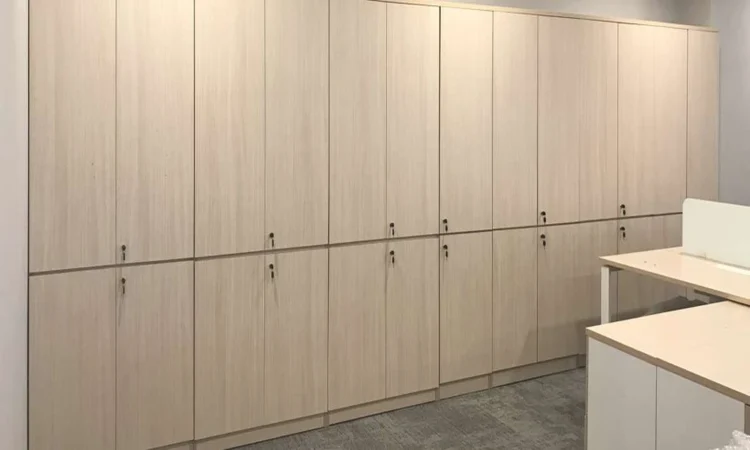
The standard inventory is workstations and desks, task chairs, mobile pedestals and storage, meeting tables, visitor seating, and screens or partitions to divide the space. Some providers also supply reception furniture, breakout seating and lockers for agile working. Ask what is actually held in stock locally, because a catalogue is not the same as availability, and the whole point of renting is that the furniture arrives when the team does.
Scaling Up and Down
The value of a rental arrangement lies in what happens after delivery. Establish how quickly additional workstations can be supplied, what notice is required to return items, and whether returning early attracts a charge. A contract that makes adding easy and removing expensive is not flexible; it is a purchase with extra steps. Ask specifically about the minimum term per item rather than for the agreement as a whole, since these frequently differ.
Consistency Across the Floor
An office furnished in three batches over eighteen months tends to look it, and mismatched desk heights cause practical problems when teams reconfigure. Confirm the provider can supply matching items throughout the term rather than whatever is in the warehouse that month, and ask what happens if a line is discontinued. Where an exact match cannot be guaranteed, plan zones so that any variation reads as intentional rather than accidental.
Ergonomics Should Not Be the Compromise
There is a temptation to accept whatever chair comes with the package because the arrangement is temporary. Eighteen months is not temporary to the person sitting in it, and the cost of poor seating shows up as discomfort and absence rather than on the invoice. Insist that rented task chairs offer height, seat depth and lumbar adjustment as a minimum, and ask to see a sample before agreeing to fifty. A provider who treats chairs as interchangeable units is one to be cautious about, since it usually indicates a fleet bought on price.
Delivery, Installation and Access
Commercial buildings in Singapore impose constraints that catch out first time renters. Service lift bookings, restricted delivery hours, loading bay slots, protection of common areas and after-hours access permits all need arranging in advance, and some buildings prohibit installation during office hours entirely. Establish who handles those arrangements. A supplier who manages building coordination as part of the service is worth more than a slightly lower rate from one who leaves it to your office manager.
Maintenance and Replacement
One of the genuine advantages of renting is that failures are the provider’s problem. A gas cylinder that sinks, a caster that seizes, a drawer runner that jams should be repaired or replaced without argument. Confirm the response time, whether replacement is on site or by collection, and what counts as fair wear and tear as opposed to chargeable damage. Any furniture rental for offices agreement should state this clearly, because ambiguity here surfaces at the end of the term.
Condition at Handback
Photograph everything at delivery and keep the inventory list. Note existing marks in writing rather than assuming they will be overlooked. At collection, the deposit is assessed against the condition standard in the agreement, and disputes almost always come down to what was recorded at the start. Ask whether cleaning is charged separately and whether missing items are billed at replacement or depreciated value.
Getting the Arrangement Right
Start from the headcount curve you actually expect rather than the one in the business plan, and rent to the realistic figure with a clear route to add more. Compare total cost over your genuine occupancy, not the monthly rate. Confirm stock availability, lead time, building coordination and the returns process before signing. Structured that way, Office Furniture Rental removes an entire category of decisions from a business that has more pressing things to be wrong about.