Kansas City Pest Control: Kitchen Ant Identification and Why Spraying the Wrong Species Makes the Problem Worse


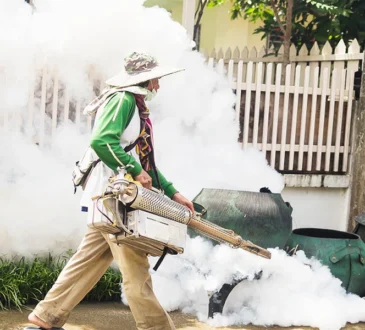
A trail of small dark ants appears along the edge of a kitchen counter in early June, following a predictable path from a gap behind the backsplash to a bowl of fruit on the counter. The homeowner reaches for a can of ant spray under the sink, treats the trail, wipes up the dead ants, and feels like the problem is handled. Within two weeks, there are trails in three different rooms, and the activity that was once concentrated in one corner of the kitchen is now diffuse and harder to track. Kansas City pest control companies that handle ant calls, including ZipZap Termite & Pest Control in Lawson, see this exact pattern so often that it has a name in the industry: budding, and it is the direct result of spraying the wrong species with the wrong product.
The Two Species That Actually Matter Indoors
Several ant species forage into Kansas City kitchens, but two account for most of the chronic trouble and are the two most commonly misidentified.
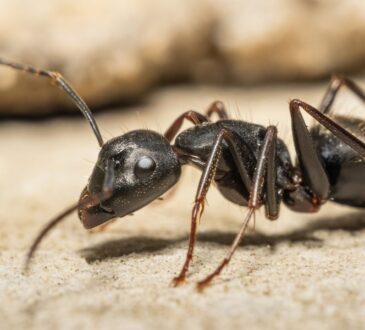
The odorous house ant (Tapinoma sessile) is the single most common indoor trailing ant across the metro. Workers are small, about 1/16 to 1/8 inch, dark brown to black, with a uniform dull appearance rather than any shiny or metallic sheen. The distinctive diagnostic is olfactory: crushed workers release a strong smell often compared to rotten coconut or blue cheese. Sniffing a paper towel after wiping a trail is the fastest species ID available to a homeowner.
The pharaoh ant (Monomorium pharaonis) is less common but far more consequential when it establishes. Workers are tiny, only about 1/16 inch, yellow to pale orange with a darker abdomen tip, and noticeably slower than native species. Pharaoh ants are tropical in origin and survive in temperate climates only by living entirely indoors. They are the species of greatest concern in hospitals, nursing facilities, apartment complexes, and commercial food-service spaces because they can carry and transmit pathogens and because they are among the most difficult ants in North America to eliminate.
Pavement ants, carpenter ants, and other occasional kitchen visitors were covered in prior posts. The two species above are the ones driving the specific scenario where a spray treatment accelerates the infestation.
Why Spraying Actually Makes Both Species Worse
The failure mode with both odorous house ants and pharaoh ants is a biological behavior called colony budding.
A typical ant colony has a central nest, a single reproductive queen, and worker trails radiating outward. Killing workers in the trail has little effect on the colony because the queen continues producing replacements, but the workers themselves are expendable and the colony persists intact.
Odorous house ant colonies are polygynous, meaning they carry multiple reproductive queens. When workers in a trail detect a chemical disturbance (repellent pyrethroid spray, for example), the colony response is to split into satellite colonies. Queens leave the main nest with small worker groups and establish new nests nearby, often in wall voids, behind appliances, under floorboards, or in mulch beds adjacent to the structure. One colony that was producing a single kitchen trail becomes three or four colonies producing three or four trails, often in rooms the original infestation never reached.
Pharaoh ants follow the same budding pattern and do it even more aggressively. A single pharaoh ant colony disturbed by insecticide can fragment into dozens of satellite colonies within weeks, spreading through wall voids, plumbing chases, and shared utility pathways. In multi-family buildings, this is how a single-unit pharaoh ant problem becomes a building-wide infestation.
The University of Kentucky Entomology program and Purdue University’s urban entomology extension have both documented this budding response in controlled studies. The behavior is predictable, well-understood, and specifically triggered by the repellent chemistries found in consumer ant sprays.
Why Non-Repellent Bait Is the Correct Treatment
Both species require non-repellent treatment that worker ants cannot detect and that kills slowly enough to allow sharing back to the colony through trophallaxis (the mouth-to-mouth food exchange that ants use for colony communication).
Sugar-based gel baits and liquid baits containing non-repellent active ingredients (borate, fipronil at very low concentrations, or specific formulations of hydramethylnon or thiamethoxam) are the standard professional approach. Workers feed on the bait, return to the nest, share the bait with other workers and with the queen through trophallaxis, and the toxicant circulates through the colony over several days. When the method works, the entire colony dies, including the queens.
Bait rotation matters for pharaoh ants in particular, because the species has documented tolerance to several formulations. A mix of protein-based and sugar-based baits, rotated over the course of treatment, produces better results than any single product used alone.
Consumer versions of non-repellent baits exist and can work for small odorous house ant infestations. They are less effective for established pharaoh ant problems, where the colony complexity and multi-unit spread usually require professional assessment.
What Actually Works as a Home Approach
A homeowner who has identified ants as either odorous house or pharaoh species can take several steps before involving a professional.
Do not spray. This is the single highest-leverage action, and it runs against every instinct. Let the trail continue while bait work begins.
Place a non-repellent gel bait along the trail in small droplets, roughly pea-sized, at intervals of about a foot. Workers should find the bait within hours and begin feeding. Resist the urge to clean the trail during this period.
Continue baiting for at least two to three weeks, even after activity appears to decrease. Pharaoh ants in particular can produce apparent control that masks ongoing satellite colonies.
Address the moisture and food sources that supported the trail in the first place. Leaking pipes, standing water under houseplants, crumbs along appliance edges, and open pet food all contribute.
Track which rooms show activity and which do not, because a pattern of spread after bait placement indicates the colony has already budded and professional assessment is warranted.
When Kansas City Pest Control Involvement Makes Sense
A single odorous house ant trail that responds to consumer bait within two weeks usually does not need professional service. Several situations genuinely do.
Pharaoh ant confirmation in any residential setting typically warrants professional treatment because of the species’ budding aggression and the likelihood of multi-room or multi-unit spread.
Odorous house ant activity that persists or spreads after appropriate bait work indicates budded colonies that require coordinated treatment across all active zones.
Multi-family buildings with ant activity in multiple units benefit from building-wide assessment rather than unit-level treatment, for the same biological reasons.
Commercial food-service, medical, and childcare settings face regulatory and safety considerations that make professional ant management the default.
The Short Version
Odorous house ants and pharaoh ants dominate indoor ant complaints in the Kansas City metro, and both species respond to spray treatment by budding into multiple colonies that spread the problem rather than containing it. Non-repellent bait, placed along active trails and supported by appropriate sanitation, is the treatment that actually works. For infestations that persist after reasonable home effort, a Kansas City pest control provider such as ZipZap Termite & Pest Control can handle the coordinated baiting and monitoring that these species specifically require.